
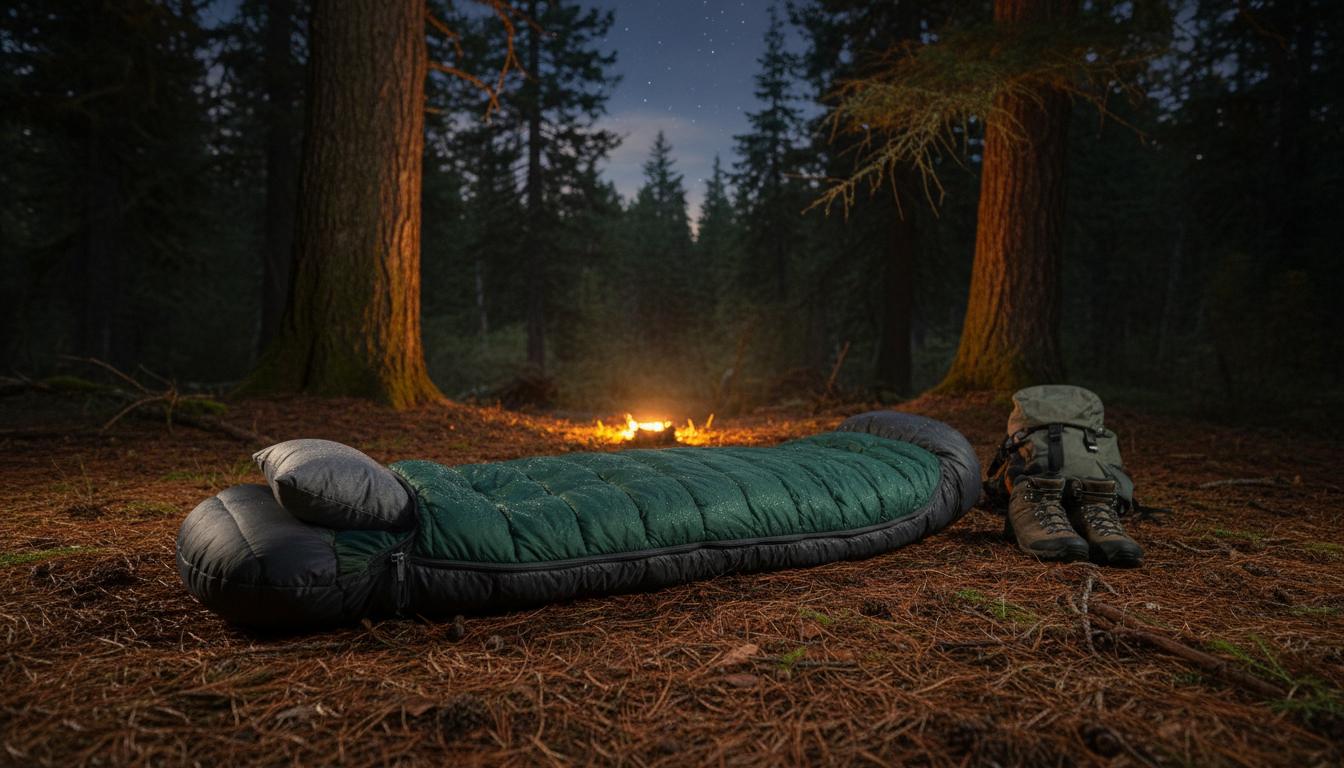
New Zealand rewards early starts and clear, cold nights. Whether you’re tramping a Great Walk, chasing a sunrise in the Kaimai, or hunkering down in a Canterbury hut, the right sleeping bag turns a long day into a good sleep. This guide explains what a sleeping bag is, how it traps warmth, the main types you’ll see in NZ stores, and how to choose and use one for local conditions.
What is
A sleeping bag is a portable insulated cocoon that slows heat loss while you sleep outdoors or in basic huts. It combines an inner lining, insulation, and a durable outer shell to create loft (thickness) that traps warm air around your body. Unlike blankets, a sleeping bag surrounds you to reduce drafts, which matters on the tops, in alpine basins, or in a breezy DOC hut.
Modern sleeping bags are rated for temperature using the EN/ISO standard (ISO 23537). You’ll see three numbers on better bags: Comfort (typical cold sleeper), Limit (typical warm sleeper), and Extreme (survival only). Most Kiwi trampers choose using the Comfort and Limit ratings, not Extreme.
How it works
Your body is the heater; the sleeping bag is the insulation. The fill—down or synthetic—puffs up to form tiny air pockets. Those pockets slow convection and radiation of heat. The more loft, the warmer you stay.
Key design features that keep heat in:
- Hood and draft collar: seal warm air around neck and head.
- Draft tube: an insulated flap along the zip to stop cold leaks.
- Baffles: stitched chambers that prevent insulation from shifting.
- Shape: a mummy sleeping bag reduces dead space, so you heat the bag faster.
Moisture matters in New Zealand. Down is very warm for its weight, but it loses loft when wet. Treated (hydrophobic) down resists moisture better, and modern shells use durable water repellent (DWR) coatings. Synthetic fill keeps more warmth when damp and dries faster, which is handy in coastal or bush conditions. Either way, your sleeping mat’s R-value is part of the system; without an insulated mat, heat will drain into the ground, even with a premium bag.
About ratings: ISO 23537 tests assume a sleeping mat and base layers. Comfort suits a cold sleeper; Limit suits a warm sleeper in a curled position. For most NZ trips, choose by Comfort if you tend to feel the cold, or by Limit if you sleep hot and know your layers.
Types / examples
Sleeping bag shapes and fills aim at different trips. Here’s how they differ in practice.
By shape
- Mummy: tapered with a hood. Best warmth-to-weight, ideal for alpine and shoulder seasons.
- Semi-rectangular: roomier through the shoulders and feet; a good hut and car-camping compromise.
- Rectangular: maximum space, can unzip flat like a duvet; best for summer camping and guest use.
- Double: for couples in tents or vans; heavier but comfortable.
- Quilt: pairs with a high R-value mat; ultralight tramping when every gram counts.
By insulation
- Down sleeping bag: very warm for weight and packs small. Look for fill power (e.g., 650–900) and ethical sourcing (RDS). Protect from prolonged wet.
- Synthetic sleeping bag: resilient in damp conditions, dries faster, usually cheaper. Bulkier for the same warmth.
Quick comparison
| Type | Best for | Typical temp rating (Comfort °C) | Pros | Cons |
|---|---|---|---|---|
| Mummy down | Alpine missions, 3–4 season tramping | -5 to -15 | Light, compressible, very warm | Needs care when wet, pricier |
| Mummy synthetic | Coastal tracks, damp bush, budget | 0 to -5 | Warms when damp, dries faster, affordable | Heavier, bulkier |
| Semi-rectangular down | DOC huts, Great Walks shoulder season | -2 to 5 | More space, still compact | Less efficient than true mummy |
| Rectangular synthetic | Summer camping, spare sleep system | 5 to 10 | Roomy, inexpensive | Poor in cold, bulky |
| Ultralight quilt (down) | Lightweight tramping in settled weather | 0 to -5 (with good mat) | Very light, versatile venting | Draft management needed, mat-dependent |
Pros and cons
Advantages of a sleeping bag
- Efficient warmth thanks to full-body enclosure and hood.
- Predictable performance with ISO temperature ratings.
- Stable insulation that doesn’t shift like loose blankets.
- Compact enough for tramping packs, especially with down.
Limitations
- Fit can feel restrictive if you toss and turn; choose wider cuts if needed.
- Down sleeping bags need moisture management in NZ’s humid zones.
- Weight adds up for colder ratings; match to realistic conditions.
How to use or choose
Choosing the right sleeping bag for NZ conditions
- Define the coldest trip: Where and when? North Island bush in November is different from a September Ruahine tops trip.
- Match temperature rating: Take the forecast low and add a safety margin of 5–10°C to choose your Comfort/Limit. Cold sleepers should use Comfort.
- Pick insulation: Down for light-and-warm in drier or colder conditions; synthetic for reliably damp trips and budget buys.
- Select shape and fit: Mummy for efficiency; semi-rectangular for comfort. Check shoulder width and footbox room.
- Check the fill quality: For down, higher fill power (700–900) gives more warmth per gram. For synthetic, look for modern continuous or short-staple blends.
- Weigh packed size vs performance: For multi-day tramping, under 1.2 kg is a common target for a 3-season down bag; synthetic often runs 1.3–1.8 kg for similar warmth.
- Inspect features: Two-way zip for venting, draft collars, well-placed baffles, a snag-resistant zip guard, and a hood you can cinch with one hand.
- Think about the sleep system: Pair with an insulated mat (aim R-value 3–4 for shoulder season, 5+ for winter). Consider a liner for hut hygiene and a few degrees of extra warmth.
- Consider NZ brands and support: Macpac, Kathmandu, Torpedo7, and Earth Sea Sky offer locally-relevant models and aftercare. Also look at Sea to Summit and other reputable makers.
- Plan care and storage: Ensure the bag comes with a large storage sack and a durable compression sack for the trail.
Using a sleeping bag for warmer, drier nights
- Air it: Shake your sleeping bag to restore loft before bed; air it in morning sun if conditions allow.
- Sleep dry: Change into dry base layers and socks. Damp clothing steals heat.
- Protect from condensation: In tents, keep the bag from touching wet walls; in huts, avoid pressing it against windows.
- Manage venting: Use the two-way zip to crack open the footbox on milder nights.
- Eat and hydrate: A warm drink and a proper dinner help your body heat the bag.
- Keep the mat under you: If you roll around, consider a quilt strap system or a grippy mat surface.
Care and washing (step-by-step)
- Spot clean first: Use a mild soap on liners and the hood area.
- Wash rarely: When loft or smell demands it; use a down- or synthetic-specific detergent.
- Machine settings: Front-loader, gentle cycle, cold or warm water. Avoid top-loaders with agitators.
- Rinse twice: Soap residue kills loft.
- Dry low and slow: Tumble dry on low with clean tennis balls. Break up clumps by hand.
- Store loose: In a breathable storage sack or on a shelf. Never long-term in a compression sack.
FAQ
What sleeping bag temperature rating suits most Great Walks?
For peak season (late spring to early autumn), many walkers are comfortable with a Comfort rating around 0 to 5°C when using huts and wearing light layers. If you’re tenting or heading outside peak months, aim for Comfort around -2 to 0°C. Always check the forecast and consider wind exposure.
Is down or synthetic better for New Zealand?
Down wins for weight and pack size, ideal for long tramps and alpine trips. Synthetic offers peace of mind in persistently damp regions and coastal tracks. Treated down plus a solid tent and good habits works well for most NZ conditions.
What is fill power, and does a higher number always win?
Fill power measures down loft (e.g., 700, 800, 900). Higher fill power gives more warmth per gram, so you can carry a lighter sleeping bag for the same rating. Quality construction still matters—baffle design and total fill weight affect warmth.
Do women’s sleeping bags differ?
Often, yes. Women’s models may add insulation in the torso and footbox and use a narrower shoulder with more hip room. Some brands rate bags using the Comfort figure that reflects a colder sleeper. If the cut fits you better, you’ll be warmer.
Can two sleeping bags zip together?
Sometimes. You need matching zips (brand, model, length, and side—left and right) and compatible shapes. Semi-rectangular or rectangular bags pair more easily than tight mummy bags.
Do I need a liner in DOC huts?
Many trampers use a liner for hygiene and a small warmth boost (1–3°C). Some huts require a liner for provided mattresses or recommend one. A silk or lightweight synthetic liner is easy to wash and helps keep your sleeping bag cleaner.
What R-value sleeping mat should I use with my bag?
For summer huts or camping, R 2–3 can be enough. For shoulder season and cooler alpine basins, aim for R 3–4. For winter or snow camping, R 5+ (or two mats stacked) makes a clear difference. Your sleeping bag’s rating assumes a decent mat.
Are cheap department-store bags okay for huts?
They’re often fine in warm summer huts but run cold outside those conditions and pack large. For shoulder season or tenting, invest in a properly rated sleeping bag.
How do ISO temperature ratings translate to real life?
They’re a lab baseline. Your metabolism, clothing, shelter, wind, and mat all shift results. If you’re unsure, choose a slightly warmer sleeping bag than you think you need and add venting options.
What features matter most for NZ tramping?
A reliable two-way zip, a well-sealing hood and draft collar, snag guards, water-resistant shell fabric, and a cut that lets you wear a puffer jacket inside on very cold nights. Weight and pack size matter on longer trips.
How should I store my sleeping bag between trips?
Fully dry it, then store it loose in a large breathable sack or hanging in a cupboard. Keep it out of damp garages. Compression breaks down loft if left long-term.
Local buying tips
Try bags in-store if you can—fit affects warmth. Many NZ stores list both Comfort and Limit ratings; compare like for like. Pay attention to return policies and aftercare, and ask about repair services. If you tramp year-round, consider two-bag quiver: a light summer sleeping bag and a warmer 3–4 season bag, or a bag plus an overquilt for winter flexibility.
Key takeaways
- Choose your sleeping bag using ISO Comfort/Limit ratings plus a realistic margin for NZ’s changeable weather.
- Down is warmer for weight; synthetic handles moisture better. Both work here with the right practices.
- Your mat’s R-value is part of the warmth equation. Don’t neglect it.
- Fit, hood, draft features, and baffles make or break warmth in wind-prone huts and alpine camps.
- Care properly, and a good sleeping bag will serve you for many New Zealand seasons.