
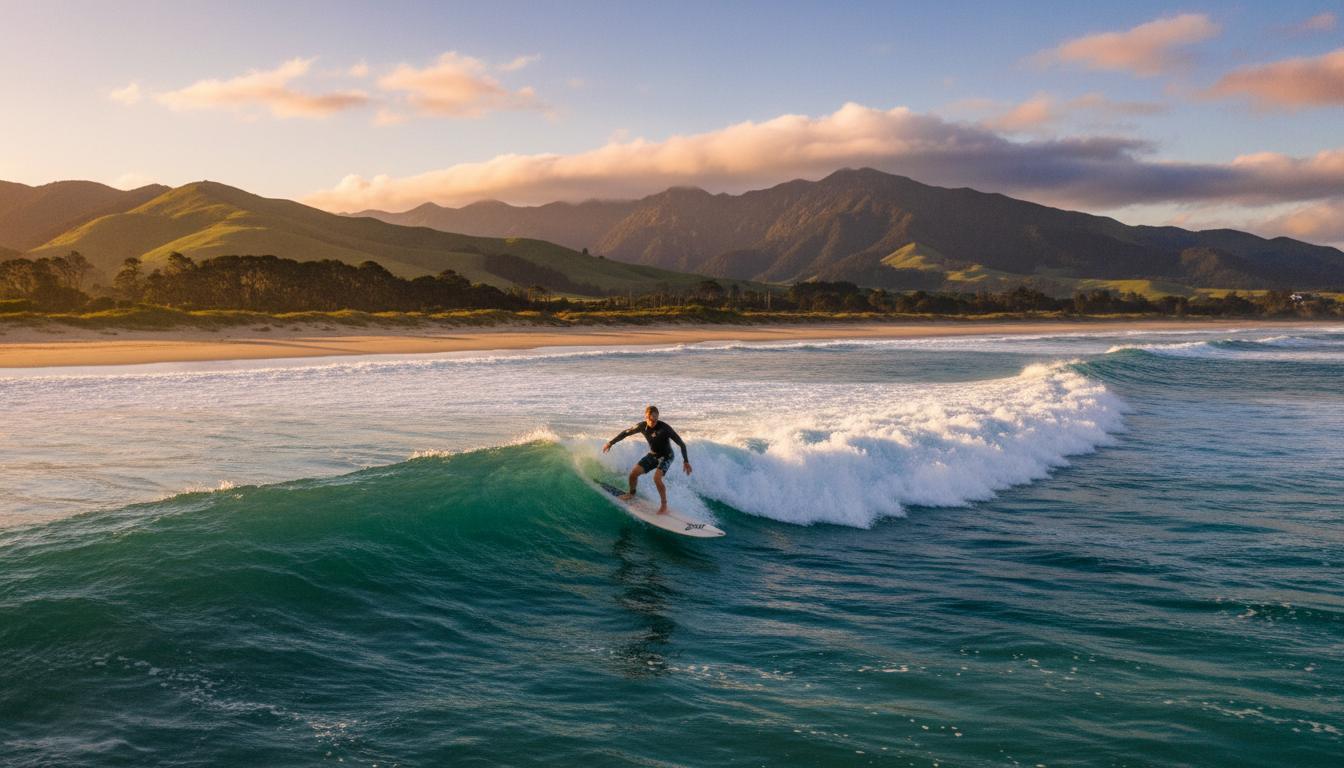
Hang five nz is all about style, timing, and finding the sweet spot on a longboard—right here in Aotearoa’s wildly varied surf. If you’ve watched a surfer walk to the nose and dangle five toes over the edge like it’s the easiest thing in the world, this is your roadmap. You’ll learn what a hang five is, how it works on a wave, the gear that helps, variations to try, where it shines in New Zealand conditions, and a step-by-step plan to land your first clean nose ride.
What is
A hang five is a classic longboarding move where the surfer walks to the front of the board and places five toes over the nose while maintaining control and trim. It demands glide rather than brute force. The board locks into the pocket, the tail holds, and your weight shifts forward until you’re literally standing on the front end.
In the hang five nz context, you’re doing this on typical Kiwi conditions—anything from mellow summer peelers to clean point-break runners on small days. It rewards patience, timing, and board placement more than raw power.
How it works
At its core, the hang five balances three forces: lift from the wave face under the nose, hold from the fin and tail in the pocket, and your body’s weight moving forward. When those align, the board accelerates without nosediving, giving you time to perch.
Hydrodynamics in plain English
- Trim and pocket: The nose sits high when you’re trimming on the open face. As you approach the pocket (that steep, energy-rich part of the wave), the tail buries slightly, giving the fin grip while the nose finds lift.
- Rail engagement: A softly set rail on the inside line helps the board track. Too flat and you’ll slide; too steep and you’ll bog.
- Speed control: Micro-adjustments—tiny stalls, slight angles—are what open the window to walk forward without pearling.
Footwork and body position
- Cross-step, don’t shuffle: Clean cross-steps keep the board stable and the rails quiet.
- Lead with hips: Let your hips guide the step; your feet follow on a straight path.
- Weight low, eyes up: Bend at knees and ankles, keep your torso relaxed, and look where you’re going, not at your feet.
- Perch with pressure: Over the nose, apply light downward pressure through the balls of your feet. Adjust back a half-step if the nose dips.
Equipment mechanics that matter
- Length and volume: 9’0″–10’0″ adds glide and stability. More foam equals easier trim and walk time.
- Rocker profile: Flatter rocker carries speed; too flat can pearl on steeper waves. A subtle nose rocker helps forgive small mistakes.
- Nose concave: A shallow concave under the nose creates lift for sustained perches.
- Fins: A larger single fin (often 9″–10″+, upright to pivot-style) or a 2+1 with a big center fin improves hold when the tail is buried.
- Rails: 50/50 or softer rails in the front half promote smooth flow and hold in the pocket.
Types / examples
Hang five nz isn’t one-size-fits-all. Try these variations as your timing improves:
- Cheater five: Keep your back foot near the midpoint while your front foot hangs five. It’s a forgiving first step.
- Classic hang five: Both feet near the nose, front toes over, calm upper body, board locked in.
- Backside hang five: Same move riding with your back to the wave. Demands stronger rail control.
- Switch hang five: Cross-step into your non-dominant stance—advanced and stylish.
- Hang five to hang ten: When speed and pocket allow, slide the back foot forward and add the other five toes.
Where it fits in NZ conditions: mellow sand-bottom beach breaks on small, clean swells; long point breaks on smaller days; summer rollers with light winds. Think of places where waves peel with enough face to walk, not dumpers or heavy closeouts.
Pros and cons
- Pros
- Works in small surf: Turns knee- to waist-high days into gold.
- Builds better surfing: Teaches trim, positioning, and flow that improve every part of your surfing.
- Low impact, high reward: Less strain than high-performance moves; easier on joints.
- Style points: Expressive, unique, deeply satisfying.
- Cons
- Board logistics: Longboards are bulky to store and transport.
- Crowds: Nose-riding needs space; busy peaks make it tougher and less safe.
- Conditions dependent: Works best on clean, lined-up waves; winds and rips cut sessions short.
- Learning curve: Cross-stepping feels awkward at first.
How to use or choose
Choosing the right gear for hang five nz
- Board: A classic log (9’2″–9’6″) with moderate nose concave, soft rails, and a stable template is ideal for beginners to intermediates.
- Fin setup: Start with a single fin 9″–10″. Slide forward in the box for more hold, back for looser turning. A 2+1 can add stability but keep sidebites small.
- Wetsuit: North Island summers often suit a 3/2 steamer or even a spring suit; colder months and the South Island typically call for a 4/3 or 5/4 with boots and hood. Check local water temps before heading out.
- Leash: Use an ankle leash long enough to avoid tangles when you step (9’–10′). Keep the cord out of your way by managing slack after takeoff.
Conditions to look for in NZ
- Wave size: Knee- to chest-high is prime for early hang fives.
- Shape: Peeling, not pitching. Long shoulders with a gentle pocket.
- Wind: Light and clean. Early mornings often give smoother faces.
- Tide: Many sandbanks prefer mid to high, but this varies by beach—watch a few sets or check a reliable local report.
NZ examples where a hang five can shine
- Point breaks on smaller swells can offer long, predictable walls.
- Sheltered beach breaks with lined-up banks are perfect for learning to walk.
- East Coast rollers on clean days often have longboard-friendly shape.
Step-by-step: your first successful hang five
- Pick the right wave: Small, peeling, not dumping. Sit wider and deeper than the shortboard pack.
- Angle your takeoff: Point slightly along the face to avoid stalling on the flats.
- Set trim early: One or two smooth pumps or weight shifts to find speed, then settle.
- Lock the pocket: Aim the inside rail just under the lip line; micro-stall with a subtle fade if needed.
- First cross-step: From a stable stance, cross your back foot over the front, landing clean and centred.
- Second cross-step: Repeat, keeping knees soft and shoulders level. No shuffling.
- Perch: Place your front foot so five toes curl over the nose; back foot just behind, weight light but committed.
- Adjust: If the nose dips, ease a half-step back. If the board outruns the pocket, angle slightly up the face.
- Exit with control: Step back the way you came, re-engage trim, and kick out before the closeout.
- Review: Replay the wave in your head. Where did you gain or lose speed? Adjust on the next one.
Common mistakes and quick fixes
- Shuffling feet: Practice cross-steps on grass or a balance board until it’s automatic.
- Looking down: Keep your eyes on the pocket line ahead; your body follows your gaze.
- Going too soon: Wait for the board to engage before stepping. If it feels sketchy, reset and try on the next section.
- Tiny fins or too much tail lift: Size up the fin or move it forward in the box for more hold.
Comparison: longboard setups for hang five nz
| Board Type | Typical Size | Fin Setup | Noseriding Ease | Best For | Notes |
|---|---|---|---|---|---|
| Classic log | 9’2″–10’0″ | Single fin 9″–10″+ | High | Learning hang five, style surfing | Soft rails, nose concave, stable trim; slower to turn. |
| High-performance longboard | 9’0″–9’2″ | 2+1 (7″–8″ center + sidebites) | Medium | Mixed turns + short nose rides | More responsive; less nose lift in weak sections. |
| Mid-length | 7’0″–8’0″ | Single or 2+1 | Low–Medium | Learning trim, smaller riders | Possible cheater fives; true perches are harder. |
| Soft-top longboard | 8’0″–9’0″ | Single or thruster | Low–Medium | First sessions, safety | Forgiving but often too flexy for long perches. |
FAQ
What is hang five nz?
It’s the art of riding with five toes over the nose of a longboard in New Zealand’s typical surf, blending classic technique with local conditions.
What board do I need to hang five?
A 9’2″–9’6″ classic longboard with moderate nose concave, soft rails, and a larger single fin makes learning far easier.
Can beginners learn a hang five?
Yes. Start with trim and cross-stepping on small, clean waves. Many surfers get reliable cheater fives in weeks; a solid perch can take longer.
What wave size is best?
Knee- to chest-high, peeling waves are ideal. You want time and face, not punchy closeouts.
Do I need a single fin?
No, but a larger single fin gives better hold and stability. A 2+1 can work if the center fin is big enough and the sidebites are small.
Where in NZ should I practice?
Look for mellow sandbanks or points on smaller swells with clean faces and room to move. Early mornings often provide the smoothest surface.
How do I stop pearling when I step forward?
Wait until the tail is engaged in the pocket, keep a slight angle down the line, and be ready to step back half a stride if the nose dips.
Booties or bare feet?
Bare feet give the best board feel for toe placement. In colder water, thin, flexible booties are a workable compromise.
What fin size should I start with?
On a 9’4″ log, try a 9.5″–10″ single fin placed slightly forward of center in the box. Fine-tune after a few sessions.
How do I practice cross-stepping on land?
Mark a line on the ground or use a longboard on grass. Cross one foot directly over the other, hips leading, knees soft, gaze forward. Repeat until smooth.
Hang five nz boils down to matching clean technique with the right board and forgiving waves. Keep sessions short and focused, log your small wins, and pick your moments on the best-looking sets. When the board locks in and your toes curl over the edge, you’ll feel why this move has lasted generations—and why it suits New Zealand’s easygoing longboard days so well.