
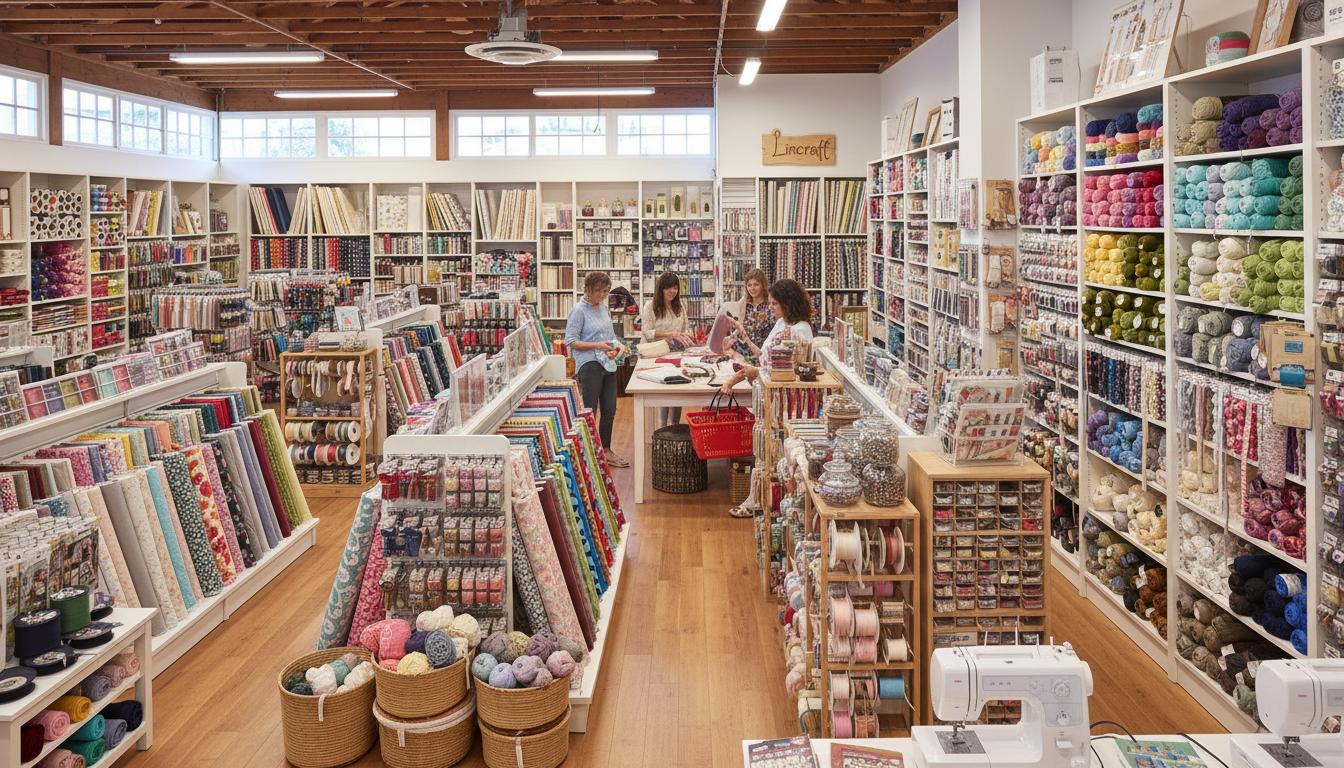
If you sew, knit, quilt, or make anything with your hands, you’ve probably heard the name lincraft. It pops up when you search for fabric deals, yarn colours you can’t find locally, or craft kits to get a project off the ground. This guide explains what lincraft is, how it fits into a New Zealand maker’s toolkit, what to expect when shopping, and smart ways to choose the right materials without wasting money or time.
What is
Lincraft is a well-known Australian retailer focused on fabric, yarn, haberdashery, and craft supplies. Think bolts of cotton, lengths of fleece, rows of embroidery floss, and aisles of beads, glues, and DIY kits. While its stores are primarily in Australia, many New Zealanders browse lincraft online to access a wider range of fabrics, seasonal items, and occasional promotions that complement what’s available locally.
For Kiwi makers, lincraft sits alongside local fabric stores, indie yarn dyers, and big-box craft chains. It’s one more place to source the right needle size, a specific interfacing, or an affordable lining fabric when the project can’t wait.
How it works
Shopping online
Most New Zealanders interact with lincraft via its website. You browse by category (fabric, yarn, craft, home, seasonal), filter by fibre or width, and add items to the cart. Fabric is usually sold by the metre or half-metre increments, so double-check quantities before checkout. Prices are generally listed in Australian dollars; your bank or card provider converts to NZD at the time of purchase.
Before you place an order to Aotearoa, review shipping options, delivery timeframes, and returns. Policies can change. If direct shipping to New Zealand isn’t offered at the time you shop, some people use a trans-Tasman freight forwarder. Factor in extra costs if you take that route.
Shopping in person (when you’re in Australia)
If you’re travelling, many Kiwis fit a quick stop at a lincraft store into the itinerary. In-store, you can feel the drape of rayon, test zipper sliders, and colour-match thread. Fabric is measured and cut at the counter, so bring your pattern or yardage notes. Pack a small tape measure; it’s the easiest way to check widths and repeat sizes.
Shipping, GST, and duties for New Zealand
For goods shipped from overseas into New Zealand, 15% GST generally applies. Many larger overseas retailers collect NZ GST at checkout on low-value goods; otherwise, GST may be charged on arrival. Most everyday craft orders under NZD 1,000 will not attract customs duty, but the GST rules still apply. Check the retailer’s tax and shipping notes at checkout so there are no surprises.
Returns and exchanges
Fabric cut to length is often non-returnable unless faulty. For other goods, return windows and costs vary. If you need to return across the Tasman, you’ll usually pay the postage. Keep packaging until you’ve checked colours, sizes, and measurements in daylight.
Types / examples
Fabrics you’ll typically find
- Cotton poplin and quilting cotton for shirts, dresses, and patchwork
- Linen and linen blends for breathable summer garments
- Rayon/viscose for drapey blouses and skirts
- Knits (jersey, ponte) for tees, leggings, and comfy basics
- Fleece and flannelette for winter warmers and PJs
- Specialty fabrics like tulle, satin, faux fur, felt, and costume materials
- Interfacing, batting, calico, lining, and muslin for structure and finishing
Yarn and needlecraft
- Acrylic, wool, cotton, and mixed-fibre yarns in various ply/weight
- Knitting needles and crochet hooks in common sizes
- Embroidery floss, tapestry wool, hoops, and cross-stitch kits
Haberdashery and notions
- Threads, zippers, buttons, elastic, bias binding, and snaps
- Sewing machine needles, hand needles, pins, and clips
- Measuring tools, cutting mats, rotary cutters, and shears
Craft kits and DIY
- Candle, soap, resin, and kids’ craft kits
- Beads and jewellery findings
- Paper crafts: card, stickers, adhesives, and tools
Home and seasonal
- Cushion inserts, polyfill, and pillow forms
- Decor items and seasonal craft supplies for holidays and events
Pros and cons
Pros
- Large, varied range across fabric, yarn, and general craft
- Frequent specials and promotions that can cut project costs
- Convenient one-stop shop for beginners starting from scratch
- Useful for sourcing basics (elastic, interfacing, thread) in a single order
Cons
- Trans-Tasman shipping costs can add up for small orders
- Colour and texture are harder to judge online; swatch options may be limited
- Returns from New Zealand can be slow and postage-heavy
- Stock levels fluctuate; a carted item may go out of stock before checkout
How lincraft compares for Kiwi makers
| Retailer | Range | Typical Pricing | Shipping to NZ | Best For | Watch Outs |
|---|---|---|---|---|---|
| lincraft | Broad: fabric, yarn, craft, seasonal | Often competitive with promos | Varies by current policy; check checkout | One-stop orders and basics | Shipping cost; returns time |
| Spotlight (NZ/AU) | Wide range; strong home textiles | Frequent sales in NZ stores | NZ stores and online options | Local pickup and quick access | Sale cycles; quality varies by line |
| Independent NZ fabric & yarn stores | Curated, often higher-end | Mid to premium | Local shipping; easy returns | Expert advice and special finds | Smaller selection; limited quantities |
| Online-only marketplaces | Vast, global variety | From budget to premium | Seller-dependent | Hard-to-find items | Quality consistency; long delivery |
How to use or choose
Step-by-step: choose the right fabric for your project
- Read the pattern or plan: Note fabric type, width, and required length.
- Pick the fibre: Cotton for ease, linen for breathability, rayon for drape, knits for stretch.
- Check weight and drape: Lighter for blouses, midweight for dresses, heavier for jackets.
- Confirm width: 112 cm vs 140–150 cm affects how much you need.
- Assess colour and print: Scale of print matters—large motifs need more fabric to match.
- Add allowances: Buy extra for shrinkage, pattern matching, or long sleeves.
- Plan care: If you want easy washing, avoid delicate fibres that need dry cleaning.
Step-by-step: choose yarn with fewer headaches
- Match gauge: Look at the pattern’s recommended weight and tension.
- Pick fibre for the wearer: Wool for warmth, cotton for breathability, blends for easy care.
- Buy enough dye lot: Get all skeins from the same lot to avoid colour shifts.
- Consider pilling and softness: Softer isn’t always more durable—balance both.
- Swatch and block: Always test before committing to the full project.
Step-by-step: ordering from an Australian retailer to New Zealand
- Build a consolidated cart: Combine needs (fabric, notions, yarn) to spread shipping.
- Check measurements twice: Fabric by the metre; confirm half-metre increments if needed.
- Review shipping and taxes: Look for NZ GST collection at checkout and final costs.
- Choose tracked delivery: It saves headaches if a parcel is delayed.
- Save your order details: Keep invoices for any returns or warranty claims.
Practical buying tips
- Order a neutral thread and elastic in bulk to avoid repeat shipping on small items.
- If colour matching matters, choose solids over complex prints when you can’t see in person.
- For school projects or costumes, poly-cotton blends keep costs down and wash well.
- Interfacing varies: woven for structure that moves with fabric, non-woven for crisp support.
- For quilts, prewash precuts only if you’re prepared to re-square.
FAQ
Does lincraft ship to New Zealand?
Shipping policies can change. Check the website at checkout for current options, costs, and whether NZ GST is collected. If direct shipping isn’t offered, some shoppers use a freight forwarder, but factor in extra fees and longer timelines.
What currency will I pay?
Prices are typically shown in AUD for Australian retailers. Your bank converts to NZD. Consider exchange rates and any foreign transaction fees your card may charge.
How do I convert fabric measurements?
1 metre is about 39 inches (1.09 yards). Many fabrics come in 112 cm or 140–150 cm widths. Always check the width on the product page; it changes how much you need.
Can I return cut fabric?
Cut-to-length fabric is usually non-returnable unless faulty. Notions and unopened goods may be returnable within a set window. For cross-border returns, postage is typically at your expense. Read the returns page before you buy.
Are pattern sizes from Australia the same as NZ?
Yes. Most commercial patterns use international sizing systems. Always check the body measurements on the pattern envelope and ignore the size number on your ready-to-wear clothes.
What’s the best fabric for a beginner sewing a first dress?
Stable, medium-weight wovens like cotton poplin or linen-cotton blends. They press well, don’t slip, and forgive small mistakes. Avoid slippery satins and very stretchy knits until you’re comfortable.
How can I save money when buying from lincraft?
Wait for promotions, bundle items to offset shipping, and pick versatile basics you’ll use across projects. Buying an extra half-metre for matching can prevent costly re-orders later.
Is it worth buying tools like rotary cutters and mats online?
Yes, if the total order makes shipping efficient. Prioritise a self-healing mat, sharp rotary blades, quality shears, and a clear ruler. These improve accuracy and speed from day one.
What about sustainability?
Choose natural fibres when possible, buy only what you’ll use, and save offcuts for pockets or small crafts. Durable tools reduce waste over time. If you need synthetics (e.g., for performance wear), plan to use them fully.
Any tips for colour accuracy when I can’t see fabric in person?
View product photos on a neutral screen setting and in daylight. Read the colour name, not just the image. If your project depends on a perfect match, choose neutrals for the base and use accent colours in easily swappable trims.
Final thoughts
For New Zealand makers, lincraft is a practical part of the sourcing mix. It won’t replace your favourite local shop, but it can fill gaps—especially for basics, notions, and budget-friendly yardage. Plan orders carefully, check shipping and GST, and choose materials with your project’s needs in mind. Do that, and you’ll spend less time hunting and more time making.