
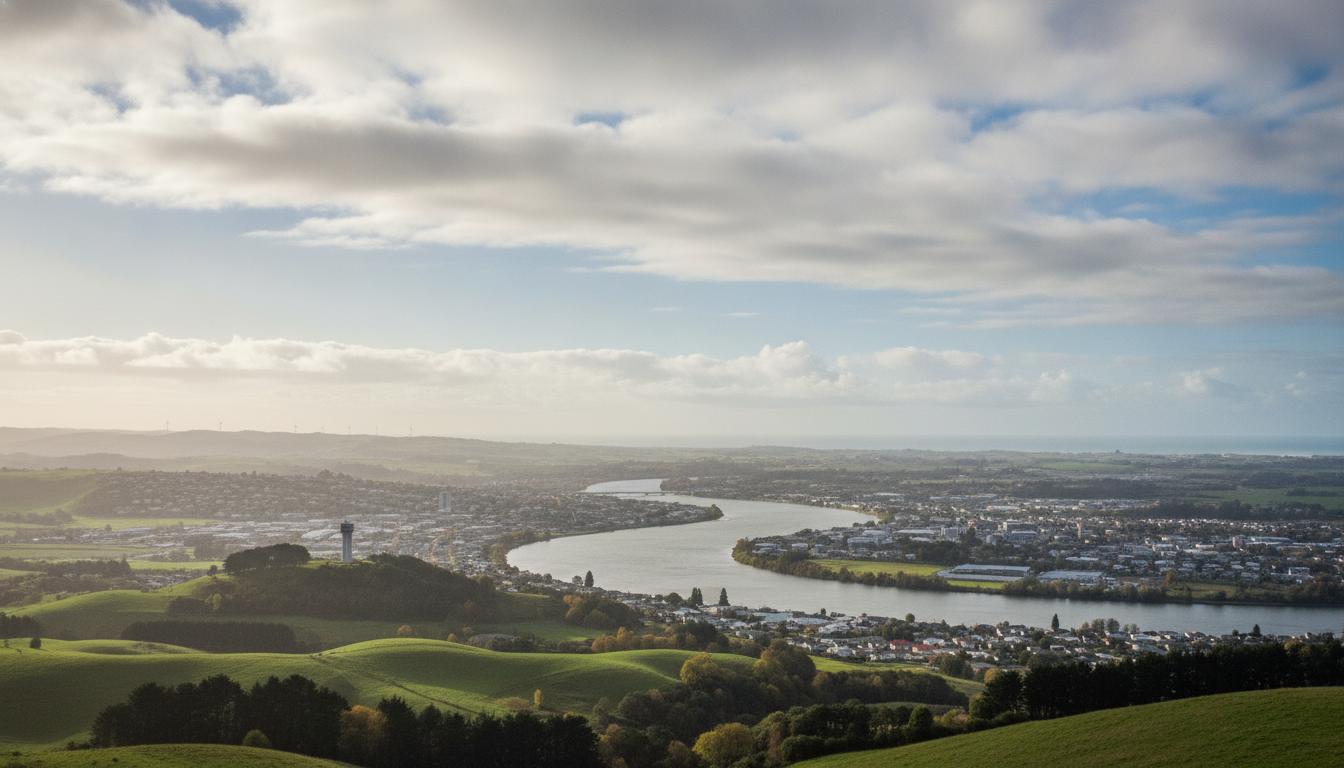
Planning around weather whanganui is easier when you know the local rhythm. This coastal city on New Zealand’s west coast has a mild, maritime climate, but it can flip from calm to brisk when a front rolls in off the Tasman. Below you’ll find a clear, local-first guide: what drives Whanganui’s weather, how to read the signs, which forecasts to trust, and smart steps for day-to-day planning.
What is weather whanganui
Weather whanganui refers to the day-to-day conditions you feel in and around Whanganui city and its river valley: temperature, wind, cloud, and rain shaped by the Tasman Sea and prevailing westerlies. It’s generally mild year-round, with changeable spells when fronts sweep through, and longer settled periods under high pressure.
Quick snapshot
- Temperatures: Summer afternoons often 20–25°C; winter days commonly 11–14°C. Nights are moderated by the sea, cooler inland.
- Rain: Spread through the year, typically higher in spring and when Tasman lows pass. Roughly 900–1,100 mm annually.
- Wind: Westerlies are the main player. Southerly changes bring cooler air; nor’westers can be warm and gusty.
- Sun and cloud: Plenty of fine days, frequent coastal cloud sheets that break by afternoon in summer.
- Microclimates: Coastal suburbs feel more breeze; river flats get fog and frost in winter; hill suburbs can be slightly wetter.
How it works
Whanganui’s weather engine is simple at first glance—maritime air from the Tasman Sea—yet the details matter. Here are the key drivers you’ll notice across the year.
The big drivers of local conditions
Prevailing westerlies and passing fronts
The mid-latitude westerlies steer fronts across the lower North Island. Expect bands of rain or showers followed by cooler, clearer air. Between fronts, the weather settles and the wind eases.
Tasman Sea lows and ex-tropical systems
Low-pressure systems developing over the Tasman can bring widespread rain and wind. Now and then, ex-tropical lows track south and inject deep moisture, lifting flood risk along the Whanganui River and its tributaries.
High-pressure blocks
When a strong anticyclone parks over the Tasman or central New Zealand, Whanganui enjoys calmer days. In summer this means sea breezes and warm afternoons; in winter it can mean foggy mornings inland and crisp nights.
Topography: coast, river valley, and hill country
The Tasman Sea stabilises temperatures along the coast. The Whanganui River valley can trap fog on winter mornings, while the hill country to the north and east squeezes showers out of westerly flows. Inland spots often see bigger day–night swings.
Seasonal shifts and climate patterns
- Spring: Fast-moving systems, frequent wind, and quick temperature shifts.
- Summer: Warm with sea breezes; afternoon cloud can hug the coast; sea fog is uncommon but possible.
- Autumn: Often settled early on; later, stronger Tasman lows become more likely.
- Winter: Cool, showery westerlies or dry, calm spells under highs; fog and light frosts inland.
El Niño years tend to bring stronger westerlies and drier conditions to the west. La Niña can lean toward more northerly or easterly rain events. These are tendencies, not rules, but they nudge what you feel on the ground.
Types / examples
Recognising common patterns makes planning around weather whanganui straightforward.
- Showery southwesterly day: Blustery, with brief showers and sunny breaks. Cooler air, cleaner visibility.
- Spring nor’wester: Warm, gusty winds ahead of a front, then a sharp southerly change with rain.
- Summer sea-breeze afternoon: Calm morning, patchy coastal cloud building, a gentle onshore breeze, then a golden evening.
- Tasman rain event: Thicker high cloud, steady rain setting in from the west, rivers rising. Wind often increases overnight.
- Winter anticyclone: Chilly dawn, inland fog along the river flats, then a bright, calm afternoon.
- Convective showers inland: On a cold upper-air day in spring or summer, bubbly clouds grow over the hills with brief heavy showers or a clap of thunder drifting toward town.
Pros and cons
Why locals rate the climate
- Mild temperatures year-round; hard frosts and extreme heat are rare near the coast.
- Plenty of usable outdoor days for walking the river paths, gardening, or surfing.
- Quick improvements after a front—sunny breaks arrive fast.
Challenges to plan for
- Changeable wind, especially in spring, can disrupt boating or cycling.
- Heavy rain events can cause rapid river rises; check upstream rainfall, not just the city forecast.
- High UV in summer; burn times can be short even on hazy days.
How to use or choose
Here’s a simple, reliable way to use forecasts and plan your day in Whanganui.
Step-by-step: planning around weather whanganui
- Check the warning layer first: Look for any heavy rain, wind, or marine warnings that could change plans.
- Scan the next 24 hours: Note wind direction shifts, rain timing, and temperature range.
- Look upstream: If rain is heavy in the central North Island or Whanganui National Park, factor river levels into your plans.
- Cross-check with a radar/satellite view: Confirm whether rain bands are actually approaching or breaking apart.
- Consider microclimates: Coastal errands? Expect more breeze. Inland activities at dawn? Watch for fog or frost.
- Time your move: On showery days, use the gaps behind fronts; on sea-breeze days, do wind-sensitive tasks in the morning.
- Pack smart: Layers, a light rain shell, sun protection, and for the coast, a warm layer for the afternoon breeze.
Choosing a forecast source
No single app nails every detail every day. Mixing an official source with a visual tool works well for weather whanganui.
| Provider | Strengths for Whanganui | Marine/Surf | Best use |
|---|---|---|---|
| MetService | Official NZ warnings, town forecasts, rain radar, and hour-by-hour detail tailored to New Zealand. | Marine forecasts for coastal waters; tide info links via local sources. | Primary daily forecast and safety checks. |
| NIWA (climate outlooks) | Seasonal outlooks and climate context; good for understanding El Niño/La Niña impacts. | Not a day-to-day marine forecast. | Planning months ahead or grasping seasonal tendencies. |
| WeatherWatch / RuralWeather | Detailed wind and temperature graphs; good inland and valley views. | Some marine and swell data via partner tools. | Cross-check timing and wind gust potential. |
| Windy | Multiple global models with easy map visuals; useful for tracking fronts and wind shifts. | Wind, waves, and swell layers for the coast. | Visualising approaching weather systems. |
| YR.no | Clean, model-based graphs; helpful second opinion on temperature and rain timing. | Limited marine context for NZ but shows wind and rain nicely. | Model comparison and confidence checks. |
Seasonal cheat sheet for Whanganui
| Season | Daytime highs | Overnight lows | Rain pattern | Typical winds | Notes |
|---|---|---|---|---|---|
| Spring (Sep–Nov) | 15–19°C | 7–10°C | Frequent showers | Strong westerly spells | Changeable; fast-moving fronts; first longer evenings. |
| Summer (Dec–Feb) | 20–25°C | 12–16°C | Intermittent; downpours in fronts | Afternoon sea breeze; occasional nor’wester | High UV; coastal cloud can drift in then clear. |
| Autumn (Mar–May) | 16–22°C | 8–13°C | Showers, later heavier rain with Tasman lows | Variable; easing westerlies | Often settled early; cooler nights arrive. |
| Winter (Jun–Aug) | 11–14°C | 4–8°C (colder inland) | Showers and calm spells | West to southwest; light winds under highs | Fog/frost inland; crisp sunny afternoons possible. |
Gear checklist for locals and visitors
- All year: Lightweight waterproof jacket, sunhat, sunscreen, and sunglasses.
- Autumn–spring: Windproof layer; warm top for coastal wind.
- Winter inland starts: Gloves and beanie for early mornings if you’re near the river flats.
- On the water: Personal flotation device, marine forecast printout or offline view, and a backup comms plan.
FAQ
What months have the most settled weather in Whanganui?
Late summer and early autumn often bring the steadiest run of fine days, especially under blocking highs. That said, any month can deliver a calm, sunny week if high pressure sits nearby.
Is Whanganui very windy?
It can be, especially in spring when strong westerlies are common. Coastal spots feel more wind than sheltered suburbs up the river. Many days are breezy rather than gale-prone.
Does it snow in Whanganui?
Snow in the city is extremely rare. Inland hill country can see a dusting during strong southerly outbreaks, but it’s uncommon and short-lived. If you want snow, you head for the Central Plateau.
How risky is flooding?
Flood risk rises during heavy rain over the Whanganui River catchment, not only in the city itself. After a Tasman low or ex-tropical system, keep an eye on river level updates and regional council alerts, and avoid low-lying roads that can pond.
What about fog and frost?
Winter anticyclones can bring river-valley fog at dawn and light frosts inland. The coast tends to be milder and clearer. Fog usually lifts by late morning when the sun gets to work.
Are thunderstorms common?
They’re occasional. You’ll see them more in spring and summer when cold air aloft meets daytime heating over the hills. Most storms are brief with a few heavy showers and small hail possible.
Is the west coast surf affected by local weather?
Yes. Westerly winds and Tasman swells can make surf powerful and messy; offshore winds are less common. Check a marine forecast and local surf reports before heading to Castlecliff or South Beach, and swim between the flags in patrol season.
How does El Niño or La Niña change things?
El Niño often strengthens westerlies, tilting Whanganui slightly drier and windier. La Niña can increase the chance of moist northerlies or easterlies reaching the region. These are background nudges rather than guarantees.
Closing thoughts
Weather whanganui is shaped by the Tasman Sea, the river valley, and the steady drumbeat of westerlies. Learn the local signals—wind shifts, front timing, sea breezes—and pair an official forecast with a radar view. With that simple toolkit, you can pick the best hour for a ride along the river, time a beach walk between gusts, and stay ahead of the big rain days when the river runs high.