
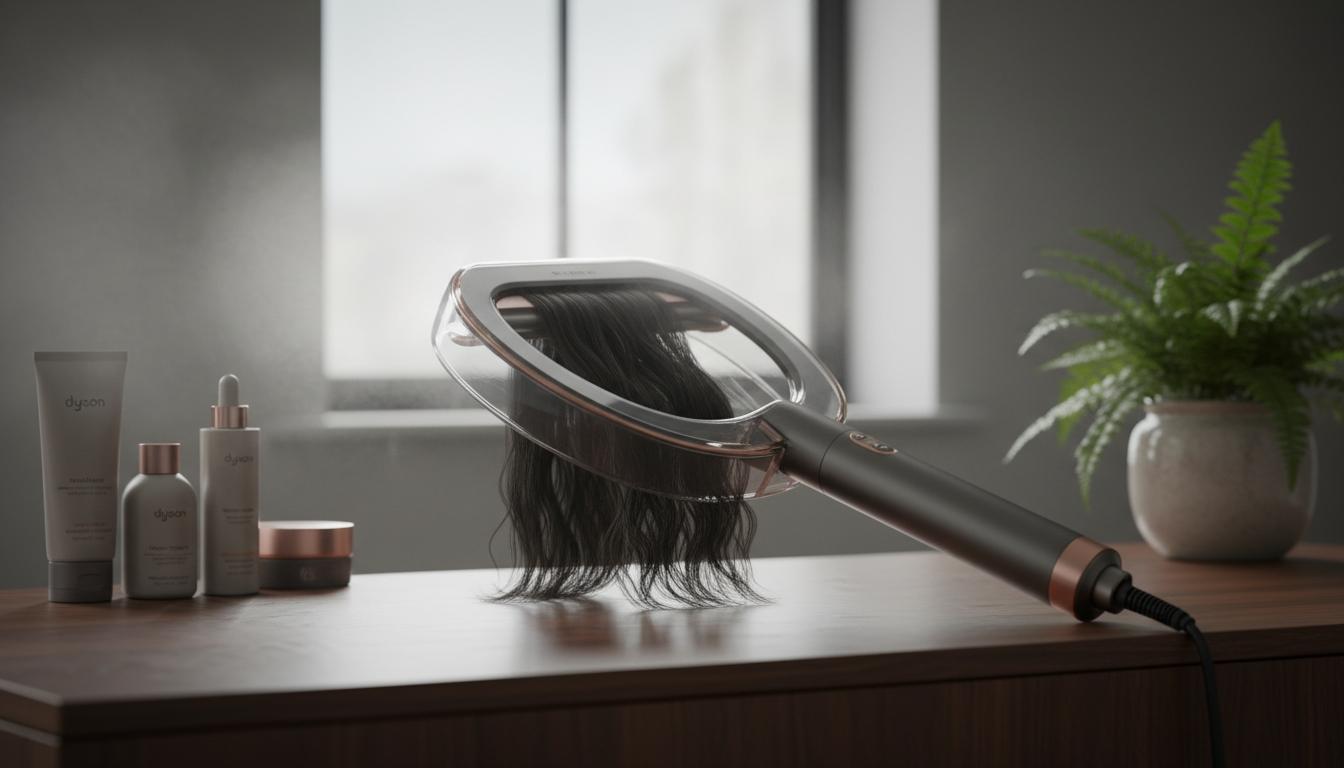
If you’re tired of juggling a hair dryer and a straightener, the Dyson Airstrait might be the one-tool answer. It dries and straightens at the same time using high-velocity air instead of hot plates. This guide breaks down what the dyson airstrait is, how it works, who it suits in Aotearoa New Zealand, and how to get the best results—plus clear pros and cons, a comparison table, and quick FAQs.
What is
The dyson airstrait is a hair tool that straightens from wet or dry hair without traditional hot plates. It uses directed airflow to remove moisture while aligning strands, aiming to reduce heat damage and cut styling time. Think of it as a hybrid: the control of a straightener with the drying power of a salon blowout, packaged into one device.
In New Zealand, it’s sold with a 230–240V plug suitable for local sockets (Type I). Tools purchased here are engineered for our voltage and come with Dyson NZ support and a local warranty. It’s a premium device pitched at people who want sleek hair with less faff and fewer passes.
How it works
Inside the dyson airstrait is a high-speed digital motor that pulls in air and accelerates it through slim vents along each arm. When you clamp the sections around your hair, sheets of air blow downward and along the strands. That airflow creates tension, dries water quickly, and smooths cuticles so hair sets straight—no clamping between hot plates.
It offers two styling modes:
- Wet mode: for towel-dried hair; uses higher airflow and controlled heat to dry and straighten together.
- Dry mode: for next-day touch-ups or smoothing; uses lower airflow and precise heat to refine.
Intelligent heat control monitors air temperature many times per second to help prevent extreme heat exposure. You’ll typically find multiple temperature settings, a Boost option for stubborn sections, and a Cool function to set the style. Because the hair isn’t squeezed between plates, there’s less direct pressure and potentially less breakage from repetitive clamping.
Key features at a glance
- Air-only straightening: dries and smooths without conventional hot plates.
- Wet-to-dry styling: go from towel-dried to straight in one tool.
- Targeted airflow: angled vents align hair and control frizz.
- Intelligent heat control: limits exposure to extreme heat.
- LCD interface: quick mode and temperature selection.
- Root-drying option: lift and dry at the roots before pass-through styling.
Types / examples
Dyson releases the Airstrait in rotating colourways (for example, Prussian Blue/Copper or Nickel/Copper). The functional hardware is the same across colours. What varies is the bundle—some retailers include a heat mat, cleaning brush, or storage pouch. In New Zealand, availability can differ by retailer and timing.
To understand where the dyson airstrait fits, here’s how it compares to other tools:
| Tool | Heat source | Works from wet hair | Main use | Damage risk | Learning curve | Best for |
|---|---|---|---|---|---|---|
| Dyson Airstrait | High-velocity heated air | Yes (wet-to-dry) | Straight, smooth finishes fast | Lower vs plates (no clamping) | Low–moderate | Busy mornings; less heat exposure |
| Dyson Corrale (straightener) | Heated flexing plates | No (dry hair only) | Pin-straight looks; shaping | Moderate (plates touch hair) | Low | Precision straightening; travel within same voltage region |
| Dyson Supersonic (dryer) + brush | High-velocity air | Yes (drying only) | Fast drying; blowouts | Low–moderate (technique-dependent) | Moderate | Versatile drying; multiple finishes |
| Traditional straightener | Heated plates | No (dry hair only) | Straight styles | Higher if overused | Low | Budget-friendly straightening |
Pros and cons
Pros
- One-step styling: dries and straightens together, saving time.
- No clamp plates: reduces direct contact and pressure on hair.
- Consistent results: airflow helps align strands and tame frizz.
- Great on wavy and loose curls: fewer passes than a brush-and-dryer combo.
- Cleaner finish on humidity-prone days: airflow sets the cuticle neatly.
Cons
- Premium price: costs more than most traditional straighteners.
- Not a curler: you can bevel the ends, but it won’t replace a curling tool.
- Learns best with sectioning: rushing large sections can reduce smoothness.
- Voltage-specific: New Zealand units aren’t designed for 110V regions.
- Bulkier than a basic straightener: storage and travel need more space.
How to use or choose
How to use the dyson airstrait (step-by-step)
- Wash and condition as usual. Towel-dry gently until hair is damp, not dripping.
- Detangle with a wide-tooth comb. Apply a heat protectant suited to blow-drying.
- Select Wet mode and your preferred temperature. Start with a moderate setting.
- Work in small sections. Place the section between the arms and close lightly.
- Glide slowly from roots to ends. Let the airflow do the drying; avoid squeezing hard.
- Repeat once if needed. Stubborn areas can use Boost briefly.
- Switch to Dry mode for touch-ups if required. Finish with a cool pass to set.
- Let the tool cool. Wipe the arms and check the filter; clean if dusty.
Choosing the right tool for your hair and lifestyle
- If you often style from wet: the dyson airstrait is designed for this workflow.
- If you love poker-straight, ultra-flat looks: a plate straightener (e.g., Corrale) still wins for maximum press.
- If you want curls and waves too: consider pairing with a curler or the Airwrap for versatility.
- Fine or fragile hair: start at the lowest effective temperature; air-led tension can be gentler than plates.
- Thick, curly, or coarse hair: take smaller sections and use a higher Wet setting; pre-dry roots for lift.
- Budget and value: factor in time saved and fewer tools needed vs the upfront cost.
Maintenance and care
- Filter: inspect monthly; clean when prompted to keep airflow strong.
- Arms and vents: wipe after use to remove product residue.
- Storage: allow to cool on a heat mat; avoid wrapping the cord tightly.
- Service: buy from authorised NZ retailers for local support and warranty.
Where to buy in New Zealand
Buy direct from Dyson New Zealand online or via major retailers that carry Dyson hair tools. Look for official stock to ensure the correct 230–240V model, local plug, and NZ warranty coverage under the Consumer Guarantees Act. Seasonal bundles can add value with accessories.
FAQ
Is the dyson airstrait good for curly or coily hair?
Yes, but technique matters. Work in smaller sections and use higher Wet settings to fully dry through each pass. For very tight coils, you may still prefer a final pass with a plate straightener for a sharper press, or use the Airstrait for stretching before other styling.
Does it cause less damage than a traditional straightener?
It can. Because hair isn’t clamped between hot plates, there’s less direct contact and pressure. Intelligent heat control also helps prevent extreme temperatures. Still use heat protectant, keep passes measured, and choose the lowest setting that gives you the result.
Can I travel with a New Zealand unit overseas?
Dyson hair tools, including the dyson airstrait, are designed for the voltage of the country in which they’re sold. NZ models are for 230–240V regions. They are not dual-voltage. Avoid using in 110V countries (e.g., the United States) and do not rely on travel converters.
How long does styling take?
Most users can go from towel-dried to smooth in 10–20 minutes depending on hair length, thickness, and section size. Learning your best section size speeds it up.
Is it noisy?
It makes a focused airflow sound, similar to a powerful hair dryer but with a more directed pitch. Normal conversation is still possible in most home settings.
Can I curl with the dyson airstrait?
It’s primarily a straightening tool. You can bevel or flick ends by turning at the last few centimetres, but for defined curls or waves, a dedicated curling tool or the Airwrap styler will be easier.
Will it work on coloured or chemically treated hair?
Yes. Use a protectant, start on a lower temperature, and avoid repeated passes. Air-led tension can be gentler on processed hair than clamped plates.
What about humidity and frizz in NZ’s coastal climate?
The directed airflow smooths the cuticle, which helps styles hold better in damp air. Finishing with a cool pass and a light anti-humidity serum improves longevity.
How do I clean the filter?
Unplug and let it cool. Remove the filter cover (as per the manual), brush away lint, and rinse or wipe if directed. A clean filter preserves airflow and heat consistency.
What attachments come in the box?
Bundles vary by retailer and season. Common inclusions are a heat-resistant mat and a cleaning brush. Check the product listing for current NZ bundles.
Does it replace my dryer?
If you mainly wear straight styles, it can. If you want rough-drying, diffusing curls, or blowout volume with round brushes, you may still keep a traditional dryer around.
How does it compare to the Dyson Corrale?
The dyson airstrait straightens using air and can style from wet, ideal for one-step speed and less direct contact. The Corrale uses heated flexing plates on dry hair for a sharper, pressed finish and more shaping control. Choose Airstrait for wet-to-dry convenience; choose Corrale for maximum plate precision.
Is the dyson airstrait worth it?
If you want faster mornings, less juggling of tools, and potentially less heat exposure, yes. If you rarely style from wet or prefer ultra-flat plate finishes, you might lean toward a traditional straightener instead.
Any New Zealand-specific tips?
Buy the local-voltage model from Dyson NZ or authorised retailers, register your device for warranty, and clean the filter regularly if you live near the beach or on dusty roads—fine debris builds faster in coastal and rural homes.
Final take
The dyson airstrait is built for people who want sleek hair, less heat stress, and fewer steps. In New Zealand homes where mornings move fast, it earns its keep by drying and straightening in one pass. If that’s your routine, it’s one of the most practical premium tools you can buy.